Why visit Polonnaruwa
Why visit Polonnaruwa
Sri Lanka's golden capital
After the fall of Anuradhapura, Polonnaruwa became the island's capital and rose to a golden age in the 11th to 13th centuries — above all under Parakramabahu the Great. What survives is one of the best-planned ancient cities in Asia: royal palaces, council chambers, monasteries and temples set across a compact, walkable site.
Serenity carved in stone
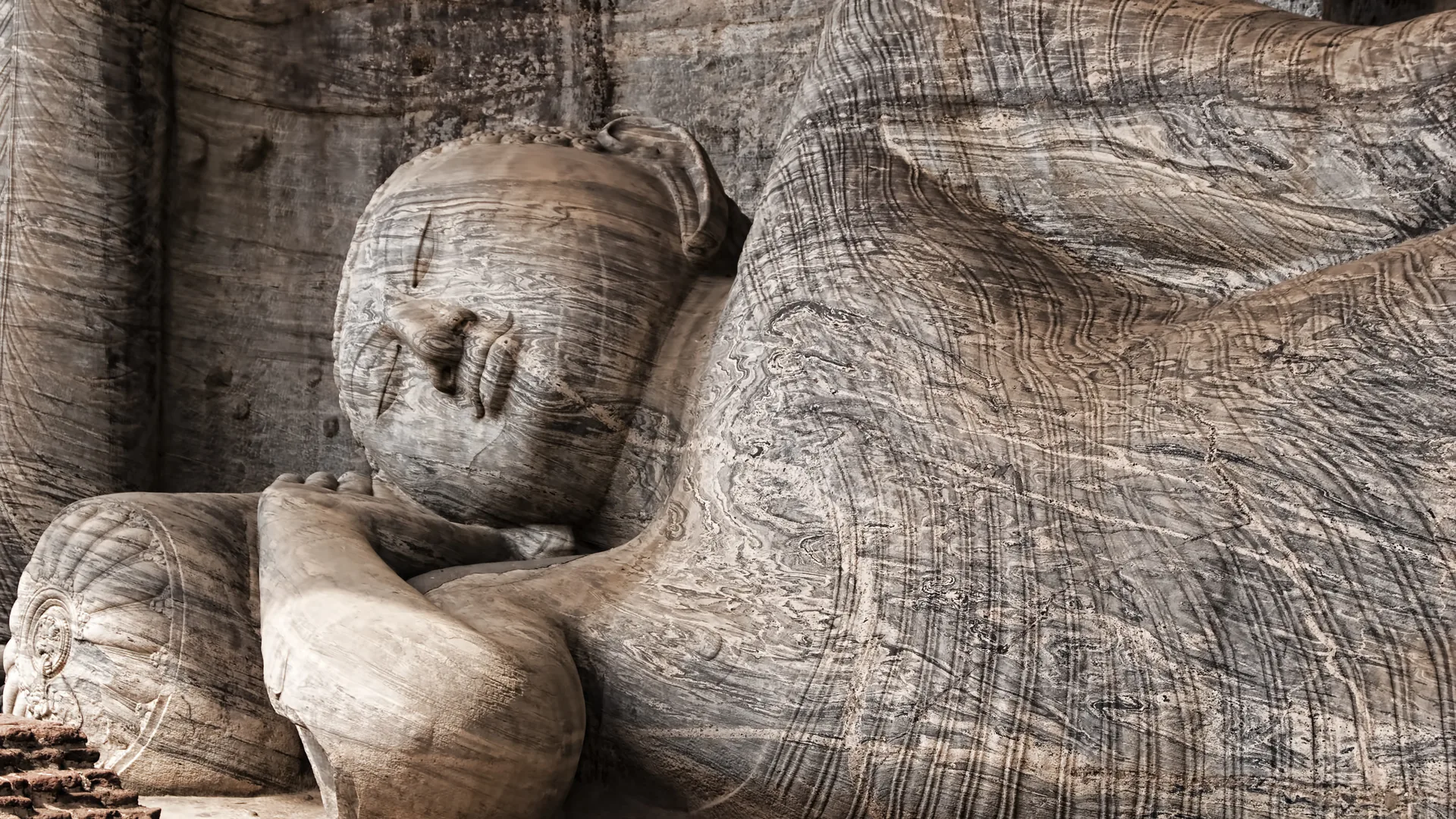
Polonnaruwa's masterpiece is the Gal Vihara — a group of enormous Buddha figures cut straight from a single granite wall, including a 14-metre reclining Buddha whose calm is astonishing up close. It's one of the great achievements of Sinhalese art, and the reason many people come.
An engineering wonder beside it
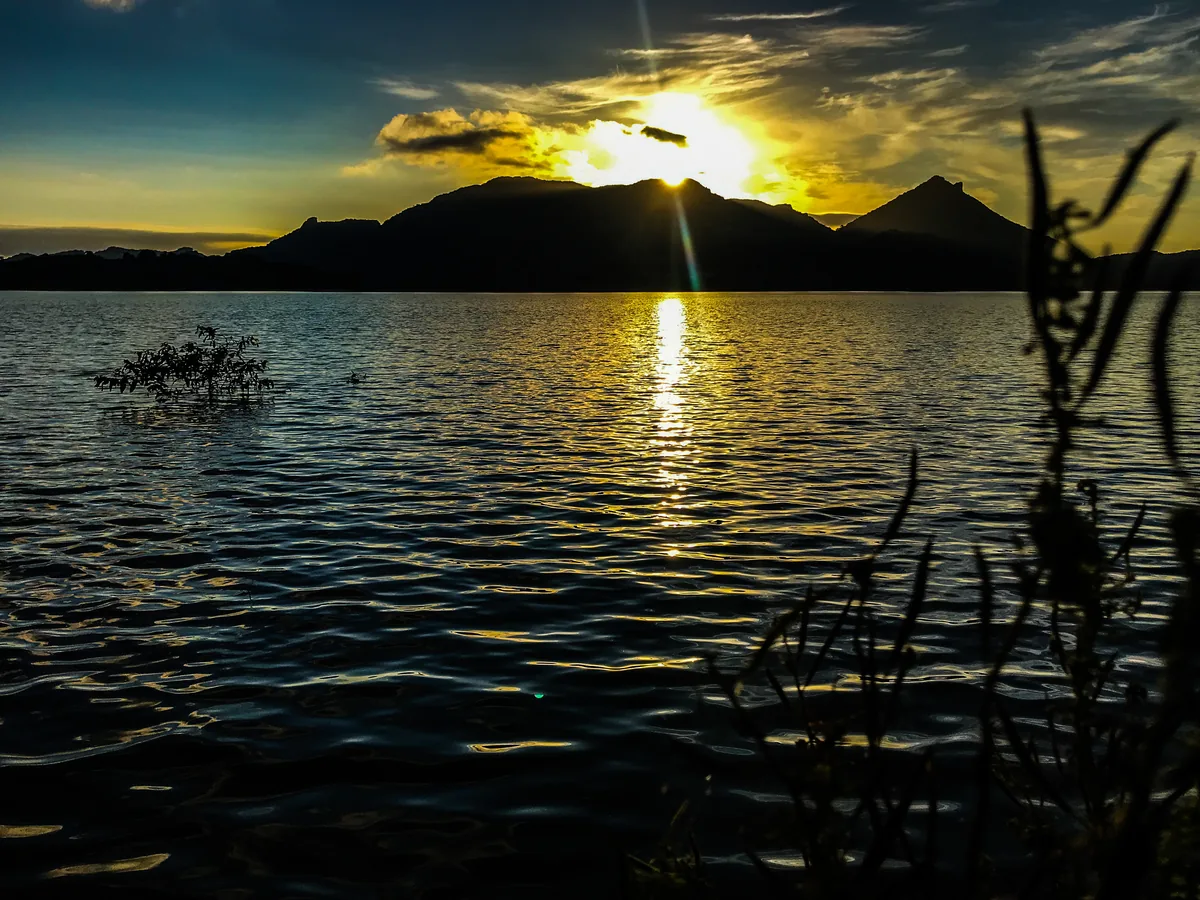
The ancient city sits along the Parakrama Samudra — the 'Sea of Parakrama', a vast reservoir built in the 12th century as the heart of an irrigation network so advanced it still waters the fields today. Its king's dictum — that no drop of rain should reach the sea unused — still defines the landscape.
What to see at Polonnaruwa
What to see at Polonnaruwa
The ancient city is compact and best explored slowly, often by bike. These are the highlights to seek out.
- Gal Vihara
The rock-cut Buddhas
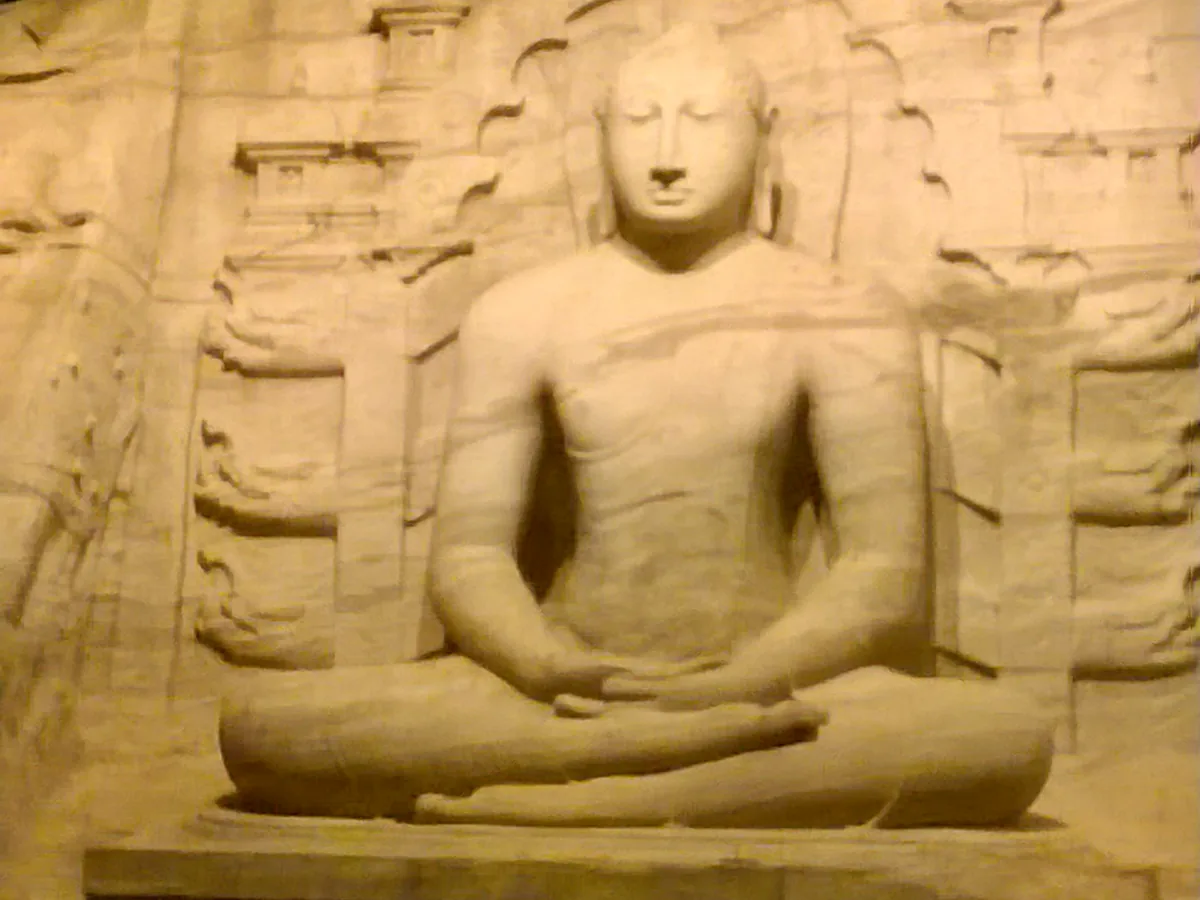
The site's crowning glory: four colossal Buddha images carved from one granite face — a seated Buddha, a standing figure, and a serene 14-metre reclining Buddha. The craftsmanship and calm make it the single sight not to miss.
- The Quadrangle
The sacred Quadrangle
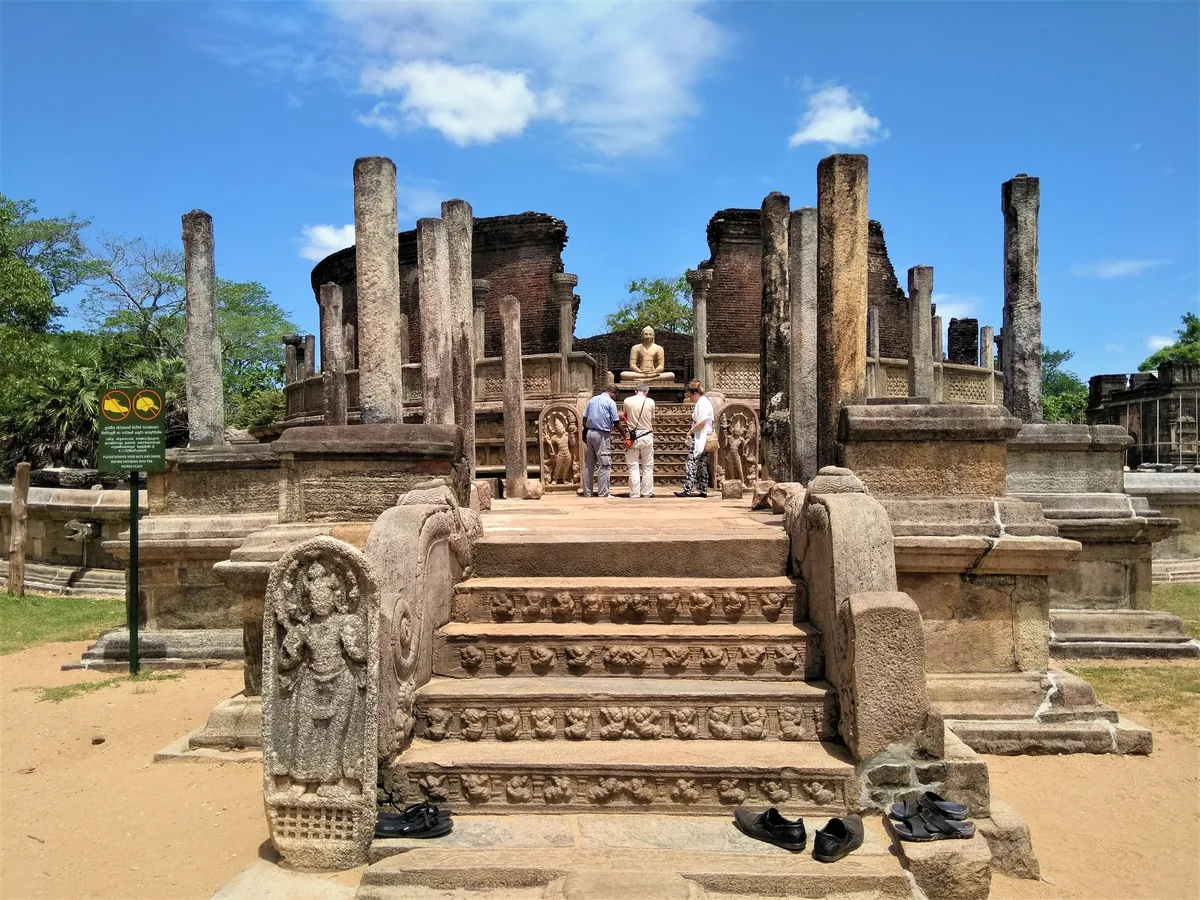
The Dalada Maluwa, a raised terrace packed with the city's holiest monuments — including the circular Vatadage relic house with its guardstones and moonstones, and the Hatadage. It's the concentrated heart of Polonnaruwa's religious life.
- The palace
Parakramabahu's palace
The royal palace complex of Parakramabahu the Great, once many storeys high, with its thick brick walls and the audience hall's carved elephant friezes still standing — a window into the court that ran the golden-age kingdom.
- Rankoth Vehera
The great stupas
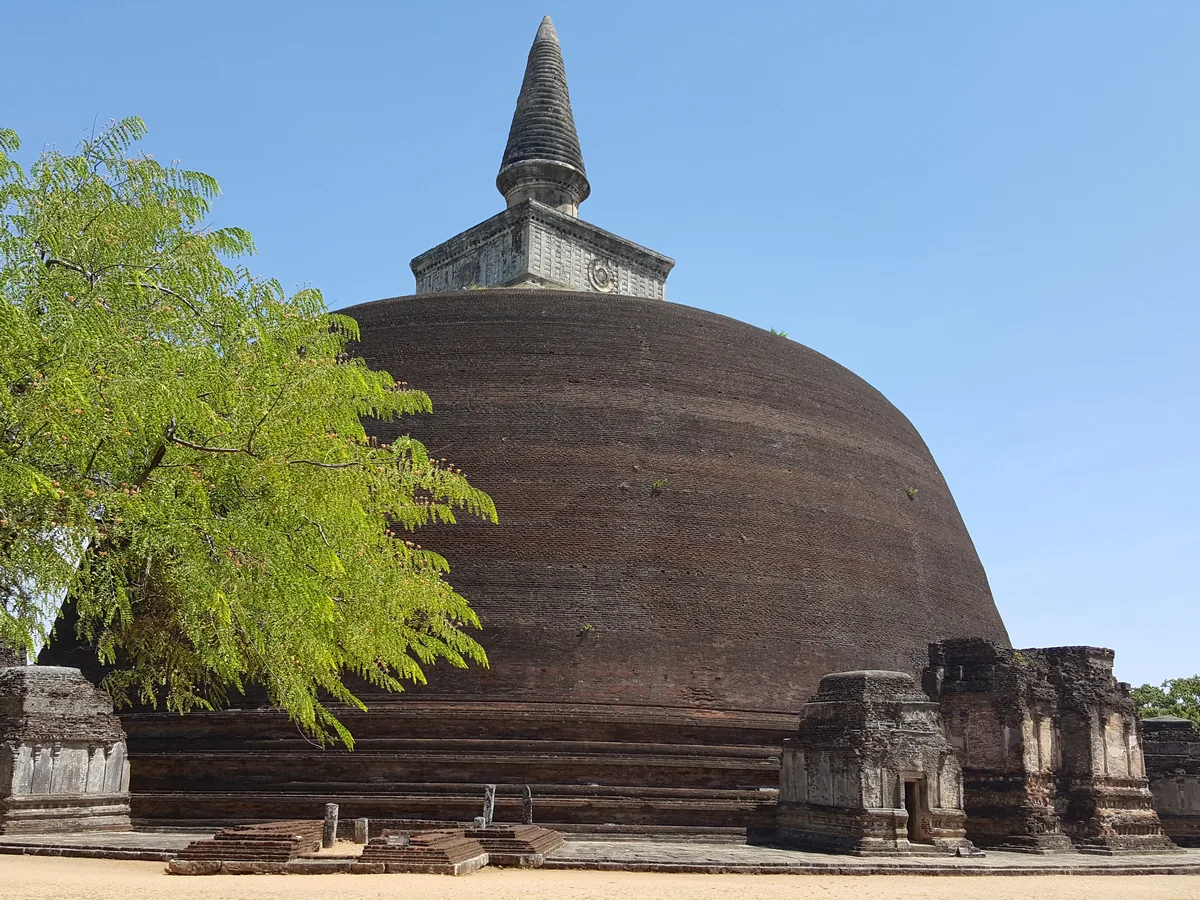
Polonnaruwa's dagobas rise across the site, the largest being the Rankoth Vehera, a brick stupa echoing the giants of Anuradhapura. Nearby stand the elegant Lankatilaka image house and other monastic remains.
- The tank
Parakrama Samudra
The vast reservoir along the city's western edge — the 'Sea of Parakrama' — is beautiful at any hour and especially at sunset. It's a fitting reminder that Polonnaruwa was as much a feat of engineering as of faith.
- By bike
Bikes & the macaques
The ancient city is flat, green and spread out — ideal to explore by bicycle, as many tours offer. Watch for the troops of toque macaques that have lived among the ruins for centuries; they're part of the atmosphere.
Getting there & planning
Getting there & planning
Polonnaruwa is in Sri Lanka's Cultural Triangle, usually visited on a day tour from the nearby bases — here's how it works.
From the Cultural Triangle bases
Most visitors reach Polonnaruwa on a day tour from Sigiriya, Dambulla, Habarana or Kandy, which handle the transport and, crucially, a guide. There's no easy self-drive substitute for the local knowledge that makes the ruins come alive.
Often paired with a safari
Polonnaruwa sits near Minneriya and Kaudulla national parks, famous for their elephant gatherings, so many tours pair the ancient city with an afternoon jeep safari. It makes for a full, rewarding day — check whether your option includes the safari.
Go early, and consider a bike
The site is open and hot by midday, so early starts are best for light, cooler air and fewer crowds. The flat, leafy layout is perfect for exploring by bicycle, which many tours provide — a lovely way to cover the distances between monuments.
On site
You'll walk and cycle on uneven ground in strong sun, so wear sturdy shoes, a hat and sunscreen, and bring water. As active Buddhist heritage, the site asks for modest dress (shoulders and knees covered) and shoes off at the sacred monuments.
Polonnaruwa & the Cultural Triangle, in pictures
Polonnaruwa & the Cultural Triangle, in pictures
The rock Buddhas, stupas and royal ruins of the ancient city, and the green country around it.
Tickets & tour options
Tickets & tour options
| Option | What it includes | Good to know |
|---|---|---|
| City guided tour | Guide and time among the ancient-city ruins | Best for focusing on the archaeology |
| City + Minneriya safari | Adds an afternoon elephant jeep safari | A popular full day; check the season for elephants |
| By bike or tuk-tuk | Explore the flat site on two or three wheels | A relaxed, scenic way to cover the distances |
| By base | Departures from Sigiriya, Dambulla, Habarana, Kandy | Choose the one nearest your hotel |
Ways to visit Polonnaruwa
Find a Polonnaruwa tour for your dates
Every option below is bookable through GetYourGuide, with live availability and the final price shown in your own currency before you pay.
Planning your visit
Planning your visit
Choose city-only or city-plus-safari
Decide first whether you want a Polonnaruwa-focused tour or a full day that adds a Minneriya or Kaudulla elephant safari. The archaeology-focused tours give the ruins more time; the safari combos make a big, memorable day. Each option's inclusions and live price are in the booking widget.
Pick your base
Tours run from the main Cultural Triangle hubs — Sigiriya, Dambulla, Habarana and Kandy. Choose the departure nearest your hotel; from Kandy the drive is longer, so weigh that against your time at the site.
Go early and consider cycling
Start early to beat the heat and the coaches. The ancient city is flat and green — ideal by bicycle, which many tours include — and cycling between the widely-spaced monuments is one of the pleasures of a visit.
Dress and prepare
It's an active Buddhist site, so dress modestly (cover shoulders and knees) and be ready to remove shoes and hats at the sacred monuments. Bring sun protection, water and sturdy shoes for uneven ground, and keep an eye on the resident macaques around your belongings.
Booking flexibility
The listings offer free cancellation up to 24 hours before and, on many options, reserve-now-pay-later — so you can lock in a day without paying today and still adjust if your Sri Lanka plans change.
Planning a Polonnaruwa day
Planning a Polonnaruwa day
GEO/FAQ
Polonnaruwa questions
What is Polonnaruwa?
Polonnaruwa is the Ancient City that served as Sri Lanka's capital in the 11th to 13th centuries, after the decline of Anuradhapura. It reached a golden age under King Parakramabahu the Great, and its ruins — royal palaces, temples, giant stupas, the Gal Vihara rock Buddhas and the vast Parakrama Samudra reservoir — make it one of Asia's best-preserved medieval cities. It has been a UNESCO World Heritage Site since 1982.
How do I get there?
Polonnaruwa is in Sri Lanka's Cultural Triangle. Most visitors come on a day tour from the nearby bases — Sigiriya, Dambulla, Habarana or Kandy — which include transport and a guide. A guide really helps here, as the ruins are spread out and rich in history that's easy to miss on your own.
What's the single must-see?
The Gal Vihara — four monumental Buddha statues carved from one granite wall, including a serene 14-metre reclining Buddha. It's considered a masterpiece of Sinhalese rock art and, for many visitors, the highlight of the whole Cultural Triangle. The sacred Quadrangle and the great reservoir are close behind.
Should I add an elephant safari?
Polonnaruwa sits near Minneriya and Kaudulla national parks, renowned for large gatherings of wild elephants, so many tours pair the ancient city with an afternoon jeep safari. It makes for a full, rewarding day — worth it if the season is right. Each option's inclusions and live price are shown in the booking widget.
What should I know before visiting?
Go early to beat the heat, and consider a tour that includes bicycles — the flat, green site is ideal to cycle. Dress modestly for a sacred Buddhist site (cover shoulders and knees, and remove shoes and hats at the monuments), bring sun protection and water, and watch your belongings around the resident macaques.
Is booking flexible?
Yes — the listings offer free cancellation up to 24 hours before the tour and, on many options, reserve-now-pay-later, so you can hold a date without paying today and still adjust if your itinerary changes. As a Cultural Triangle highlight, booking ahead is wise in season.
Still deciding which tour, or which base?
Leave your email and roughly when you're travelling — we'll send a short rundown of how the Polonnaruwa tours from Sigiriya, Dambulla and Kandy compare, and how to see the ancient city well.